

What a nationwide hybrid rollout actually involves
A multi-site hybrid workplace programme is fundamentally different from a single office fit-out. The challenge is not just specifying the right furniture but is ensuring consistent standards, coordinated delivery sequencing, and a coherent workplace experience across every location simultaneously.
For this project, that meant specifying an integrated furniture ecosystem rather than individual products, coordinating logistics across multiple regions, and ensuring each site could be installed and operational on schedule without disrupting the agency’s ongoing operations.
The five furniture decisions that define a hybrid workplace
Acoustic privacy — meeting pods
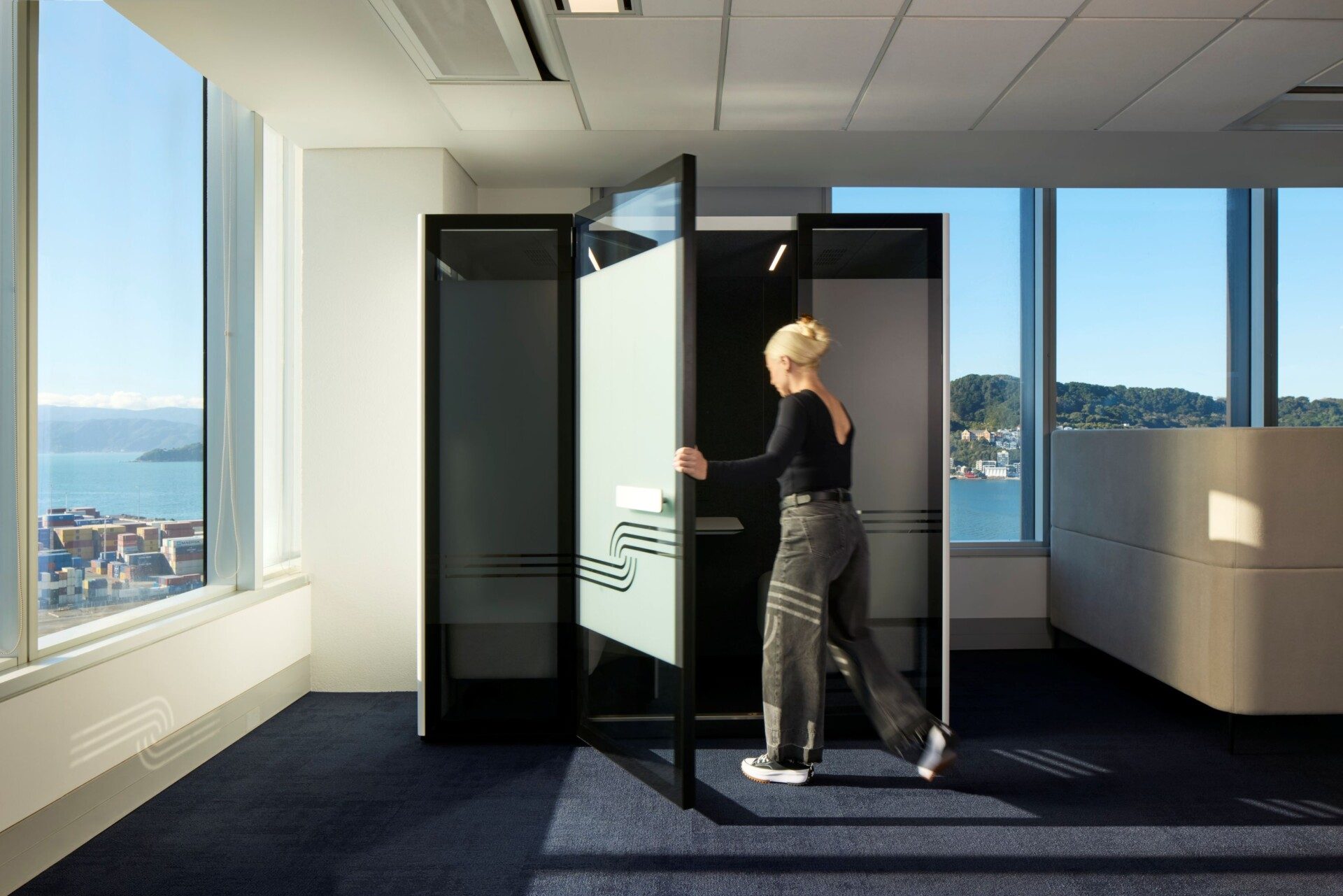
In an unassigned working environment, one of the first things employees lose is a private space for confidential conversations and video calls. Meeting pods solve this without requiring dedicated meeting rooms on every floor. For this project, Refresh C-Pods were installed across all locations, providing acoustic separation in open plan environments and enclosed settings for hybrid Teams and Zoom meetings.
Shared workstations — sit-to-stand desks
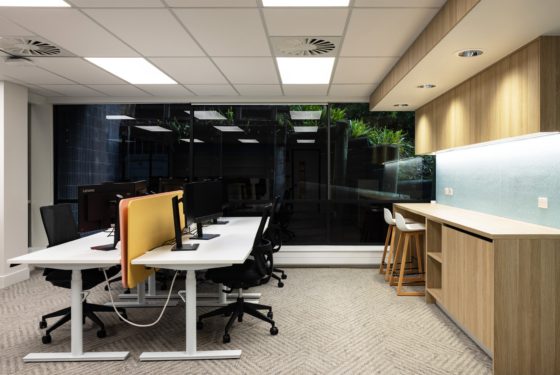
When desks are shared between different people each day, height adjustment becomes essential rather than optional. Every workstation in this rollout was specified with a sit-to-stand desk, allowing employees to adjust quickly to their preferred working height without tools or complicated mechanisms. That matters when a desk might be used by three different people across a single day.
Secure storage — smart lockers
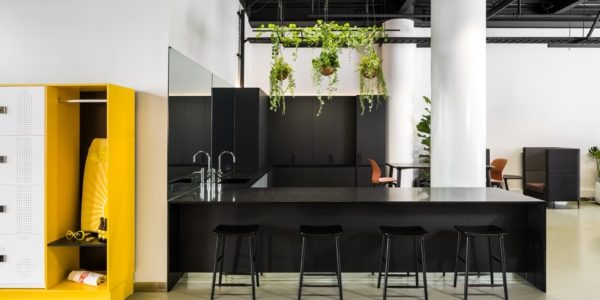
Unassigned working requires a rethinking of personal storage. Without a dedicated desk, employees need somewhere secure to store belongings, equipment and documents. Smart locker systems were deployed across all sites, enabling daily locker allocation, supporting clean desk policies and reducing clutter across the floor plate.
Ergonomic task seating — Haworth Soji chairs
In a hot-desk environment, the task chair is the one piece of furniture that must work for every user without requiring significant adjustment time. The Haworth Soji chair was selected for its multi-user adaptability, advanced ergonomic adjustment and long-term durability under high-frequency shared use.
Collaboration zones — modular soft seating
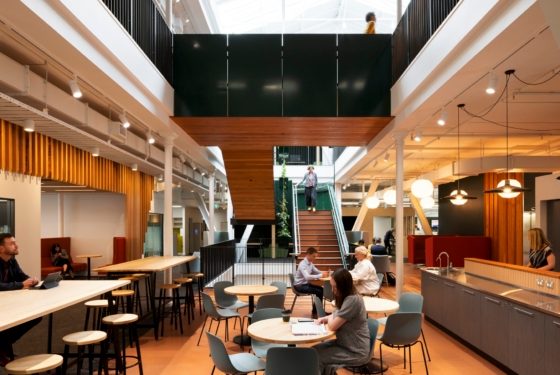
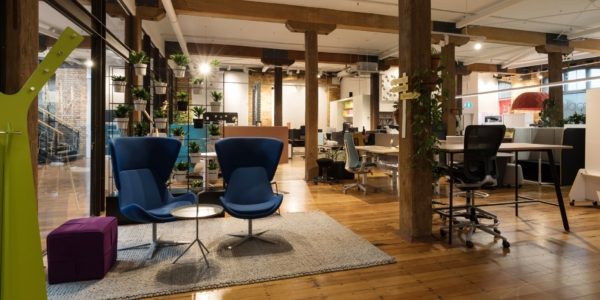
Activity-based working requires more than desks and meeting rooms. Modular soft seating was integrated throughout breakout and collaboration zones across all sites, providing informal meeting spaces, team touchdown areas and a visual signal that the office is designed for connection as much as individual work.
The logistics challenge most organisations underestimate
The furniture specification is only half the challenge on a multi-site rollout. The logistics of coordinating freight, installation sequencing, power and services alignment, and consistent standards across different building configurations is where projects most commonly run into difficulty.
Europlan’s three warehouses in Auckland, Wellington and Christchurch meant furniture could be stored locally and installed to each site’s specific timeline rather than coordinating a single national freight movement. That regional capability also allowed for faster response when site conditions changed or installation sequencing needed to be adjusted.
The result was a cohesive, future-ready workplace environment delivered consistently across all locations with hybrid and unassigned working successfully adopted from day one of operations.
What to consider before starting your own rollout
For organisations planning a transition to hybrid or activity-based working across multiple sites, a few considerations make the difference between a successful rollout and a costly one.
Specify an ecosystem, not individual products. The furniture decisions need to work together. You need pods, desks, lockers and seating that are designed to complement each other create a more coherent workplace experience than a mix of individually sourced products.
Plan logistics as carefully as specification. Delivery sequencing, site access, installation timing and regional freight all need to be coordinated from the start, not treated as an afterthought once products are ordered.
Build in flexibility from day one. Hybrid working models continue to evolve. Furniture that can be reconfigured as team sizes and working patterns change is a better long-term investment than a fixed layout that requires another full fit-out in three years.
If you are planning a hybrid workplace rollout across multiple New Zealand locations, Europlan has the specification expertise, logistics capability and nationwide delivery infrastructure to support projects of any scale. Talk to our workplace design team or request a quote to get started.